We use cookies on this site to enhance your user experience
By clicking the Accept button, you agree to us doing so. More info on our cookie policy
We use cookies on this site to enhance your user experience
By clicking the Accept button, you agree to us doing so. More info on our cookie policy
Published: Jul 30, 2026 by Tobias Hossfeld
Join us for a university-wide brown-bag event with Dr. Hilary Bergsieker, featuring a talk on unconscious bias followed by an interactive discussion and Q&A session. All students, researchers, staff, and interested members of the public are warmly welcome.
The DFG Research Unit SOS (Serverless Scientific Computing for Earth Observation and Sustainability) brings together researchers from multiple disciplines to develop novel methods for scalable, reproducible, and sustainable scientific computing. As part of our commitment to gender equality and diversity, we organize this brown-bag event to provide an informal forum for discussion, experience sharing, and awareness of diversity-related topics.
Friendship networks in male-dominated educational and professional STEM settings often exclude girls and women. Gender-based social exclusion can arise from stereotypes, and in turn limit girls’ and women’s long-term success in STEM spaces. Here, we share results from a series of psychology studies on informal friendship networks in STEM camps, courses, and companies. First, in a field study of 1330 boys and girls attending STEM-focused summer camps, boys who had more positive (less gender-stereotypical) beliefs about girls’ STEM abilities were more likely than boys with negative beliefs to be nominated by girls as friends. For girls, being more socially included (particularly by male peers) was associated with stronger STEM intentions, a connection mediated by greater subjective belonging. Next, in experiments with 1065 university students enrolled in male-dominated STEM majors, women (but not men) anticipated repetitional penalties if they associated with a woman who expressed stereotypically feminine interests. Women whose social network positions gave them less brokerage (i.e., reduced ability to manage information flows between unconnected friends) were less willing to befriend and socially integrate other women with steroetypically feminine (vs. STEM-related) interests. Finally, in field research with 1247 full-time employees working at North American STEM organizations, men who held stronger STEM = Male implicit associations reported less often choosing to socialize with their female teammates. In turn, for women at these same organizations, receiving fewer social ties from male teammates in turn was associated with worse workplace outcomes: lower engagement, self-efficacy, and feelings of fit, plus greater concerns about being judged on the basis of gender at work. Implications for advancing gender inclusion in STEM fields are discussed.
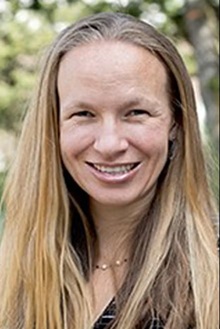
Dr. Hilary Bergsieker is now an Associate Professor of Psychology and Equity Fellow at the University of Waterloo in Canada, where she directs the Diversity and Intergroup Relations Lab. Her training in experimental social psychology included a bachelors degree in Psychology at Stanford University, a Fulbright Enterprise Scholarship at the Technical University of Berlin in Germany, and then a Ph.D. in Psychology and Social Policy at Princeton University, right before she joined the faculty at Waterloo. She conducts many international collaborations and spent her past year in Europe as a visiting professor at UCLouvain in Belgium. Dr. Bergsieker has expertise in trust formation and maintenance in diverse groups, social network analysis, and bias reduction. She was named a Rising Star by the Association for Psychological Science, won the title of Equity Fellow from the University of Waterloo for her work to support equity, diversity, and inclusion, and is an elected member of the Society of Experimental Social Psychology. She was elected to full membership in the European Association of Social Psychology this year and will start a term on the editorial board for the association’s flagship journal in 2027. As a Fellow of the Engendering Success in STEM research consortium, she collaborates with industry partners to use evidence-based interventions to advance the inclusion and success of women and other underrepresented groups in science, technology, engineering, and math. Other major ongoing lines of work investigate responsive social support for lived experiences of racism and detecting causal heterogeneity in mediation analyses. Open detailed CV
The DFG Research Unit SOS (Serverless Scientific Computing for Earth Observation and Sustainability) develops novel methods, models, and architectures for scalable, serverless scientific computing, enabling reproducible and efficient analysis of large-scale Earth observation data from distributed and heterogeneous sources. The interdisciplinary consortium brings together expertise from computer science, geoscience, and ecology to create reusable workflow technologies that support sustainable environmental research and lower technical barriers for data-intensive scientific applications.
Within the DFG SOS Research Unit, we actively promote gender equality and diversity as integral aspects of our research culture and collaboration. To support these goals, we organize this public brown-bag event to foster awareness, exchange, and inclusive participation among researchers, students, and the wider community.
Website: http://dfg-sos.de/